
The Ultimate 2026 Guide to Next-Gen 3D Scanners: From Wireless Laser Precision to Pocket-Size Portability
If you’ve ever wished you could turn real-world objects into perfect digital models—quickly, accurately, and without the technical frustration—2026’s new generation of 3D scanners finally makes that possible. Today’s leading handheld scanners mix blue-laser precision, VCSEL infrared speed, real-time wireless workflows, and AI-powered software, allowing creators, engineers, hobbyists, and businesses to capture everything from fine mechanical parts to full-color artistic pieces with ease. In this deep review, we’re comparing the most exciting models of the year—the EINSTAR Rockit Wireless Laser 3D Scanner, 3DMakerpro Moose, EinScan Rigil Wireless, Creality Sermoon S1, Revopoint POP3 Plus, and the all-in-one 3DMakerpro Toucan—so you can understand which scanner fits your workflow. If you find value in this breakdown, please consider subscribing so you never miss future deep-dive tech reviews.
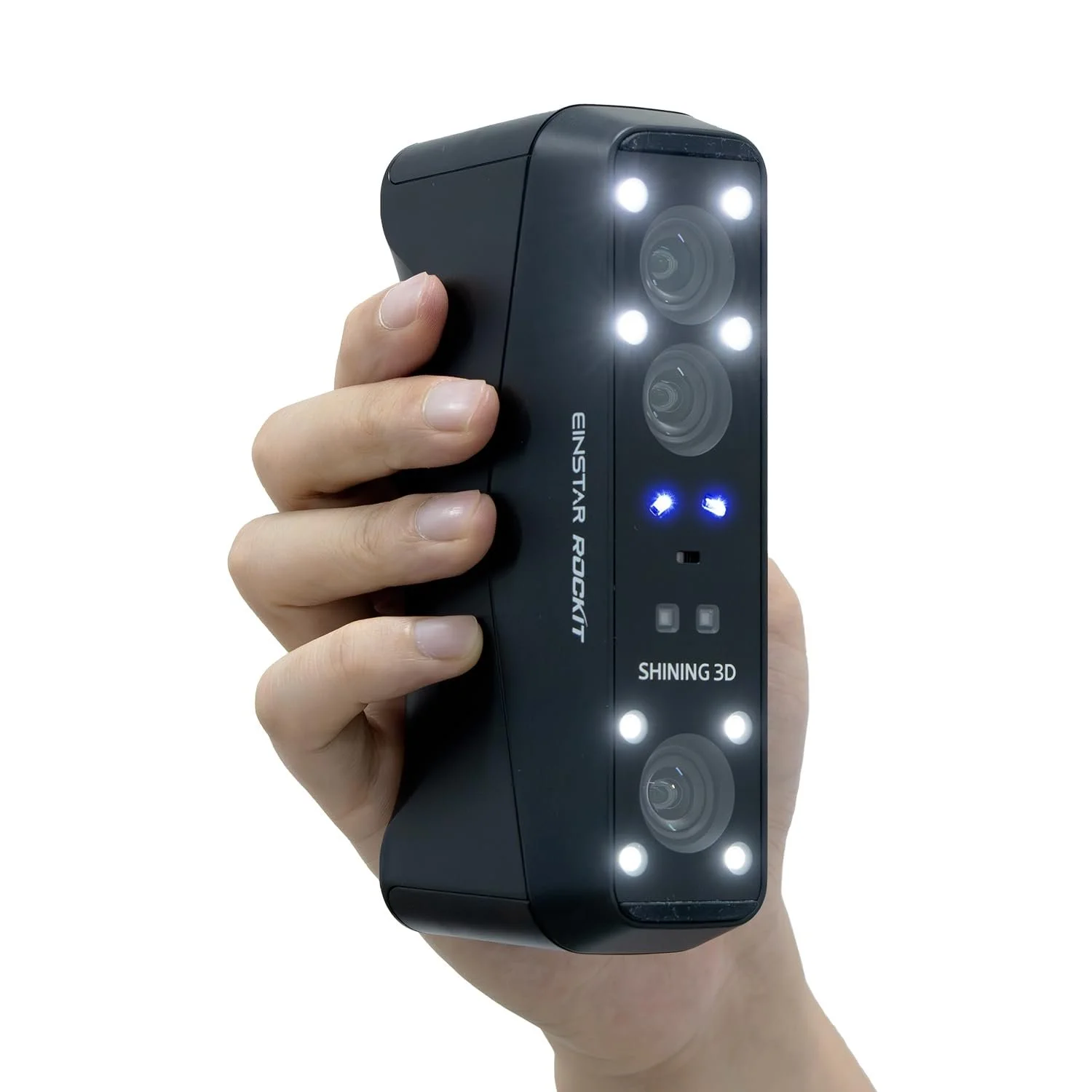
EINSTAR Rockit Wireless Laser 3D Scanner — Marker-Free Precision in Your Pocket
CLICK IMAGE TO BUY ON AMAZON
The EINSTAR Rockit Wireless Laser 3D Scanner is one of the most advanced portable scanners of 2026, designed for users who need industrial-grade precision in a truly cable-free handheld form. Its hybrid system of 19+19 crossed blue-laser lines and 7 parallel blue-laser lines gives creators the versatility to move between large-surface rapid capture and fine-detail scanning without changing devices. The blue laser technology in the EINSTAR Rockit is especially important because it handles black materials and reflective metals without needing spray—an enormous upgrade for automotive scanning, engineering components, and metal prototypes.
What makes the Rockit stand out is its marker-free scanning capability, which allows users to scan complex, feature-rich objects without sticking markers everywhere. For professionals who constantly scan mechanical parts or textured surfaces, the ability to skip markers saves time and eliminates workflow interruptions. This also pairs beautifully with its VCSEL infrared scanning mode, which offers a fast and safe way to scan large objects—everything from human faces to statues—while maintaining consistent alignment through hybrid texture and feature tracking.
The truly wireless nature of the EINSTAR Rockit sets it apart from older generations of portable scanners. Its built-in Wi-Fi module provides stable real-time sync to a PC, and its swappable battery delivers up to 3 hours of continuous scanning, giving you a level of mobility that traditional wired scanners simply cannot match. Whether you’re capturing car parts in the garage, scanning sculptures outdoors, or digitizing industrial components in a warehouse, the Rockit stays functional even under bright sunlight, supporting up to 110,000 lux in laser mode and 70,000 lux in infrared mode.
With scanning speeds up to 90 FPS, real-time point cloud generation, and its compact pocket-sized build, the EINSTAR Rockit has become one of the most appealing professional scanners for field engineers and creators who need speed without sacrificing accuracy. Its companion platform, EXStar Hub, brings everything together through an intuitive interface with streamlined workflows, lower system load, and powerful model optimization tools that reduce post-processing time dramatically. With this combination of mobility, accuracy, and marker-free design, the Rockit stands as one of the best wireless 3D scanners available today.
3DMakerpro Moose — A Medium-Format Scanner With Exceptional Color Fidelity
CLICK IMAGE TO BUY ON AMAZON
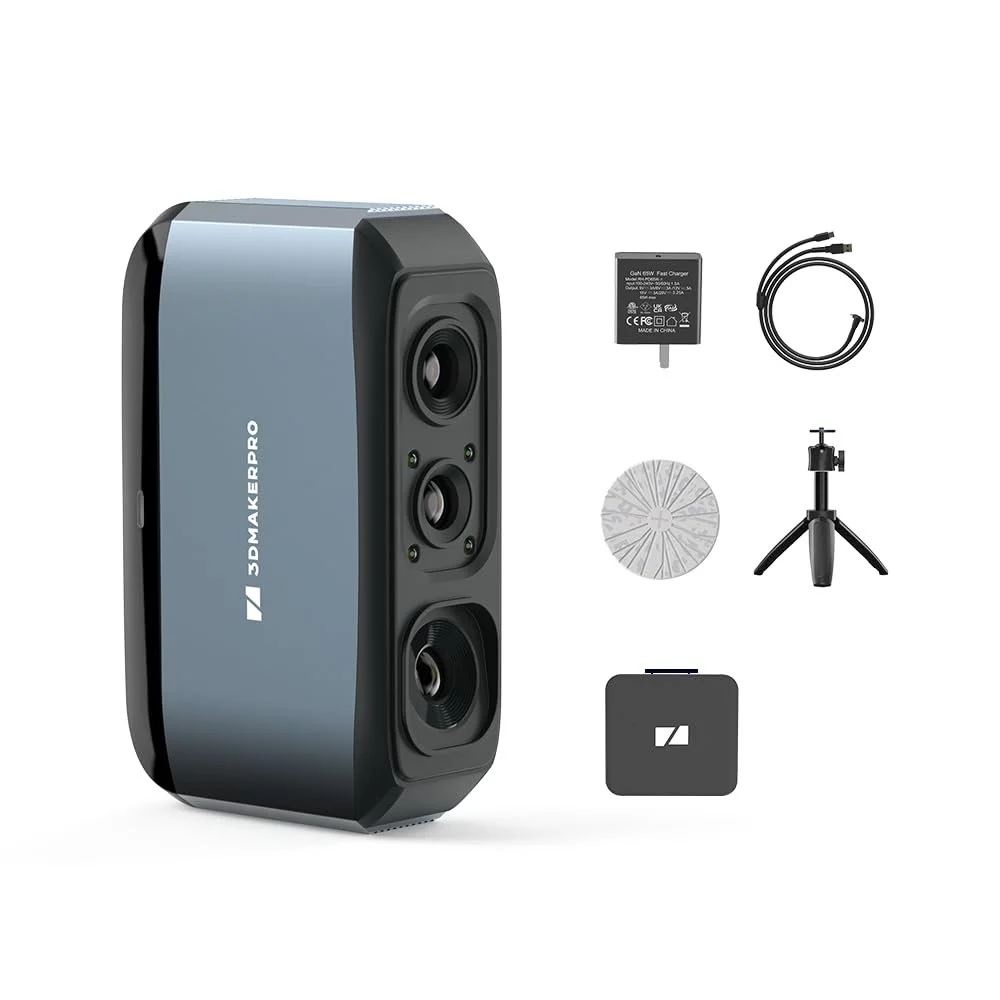
If you need a scanner that balances medium-format object coverage and full-color capture, the 3DMakerpro Moose is one of the strongest contenders in its class. Unlike many handheld scanners optimized for industrial parts, the Moose focuses on realistic textures, high-resolution color, and structured-light accuracy, making it ideal for creators, digital artists, and e-commerce professionals who require photorealistic results.
Powered by a next-generation blue LED structured-light system, the Moose offers up to 0.03mm accuracy and 0.07mm resolution, giving your scans exceptional detail. This is especially useful for figurines, ceramics, handcrafted items, custom toys, or objects with unique textures where color realism matters as much as geometry. The scanner supports objects ranging from 15mm to 1500mm, meaning you can scan jewelry one minute and a motorcycle fairing the next.
The Moose’s ability to handle 24-bit full-color scanning is a differentiator because it adds vibrancy, contrast, and realistic texture to final models. Scanning at 10 FPS, the system is reinforced with anti-shake algorithms to keep frames clean and aligned, which is crucial for handheld scanning when you’re moving around larger objects.
For beginners or creators on a budget, one of the biggest advantages is the Moose ecosystem’s multiple kit options—Standard, Premium, and Luxury packages—allowing you to add rotating turntables or stabilizers as needed. Its JMStudio software enhances the experience with features such as auto-alignment, error correction, and export options including OBJ, STL, PLY, and ASC, making it highly compatible with 3D printers and modeling tools.
The Moose does require a stronger PC and has a learning curve, but once mastered, it unlocks powerful capabilities for artists, makers, and small studios that want color-accurate, medium-format 3D scanning without the industrial price tag.
EinScan Rigil Wireless — Professional-Grade Power Without Cables
CLICK IMAGE TO BUY ON AMAZON
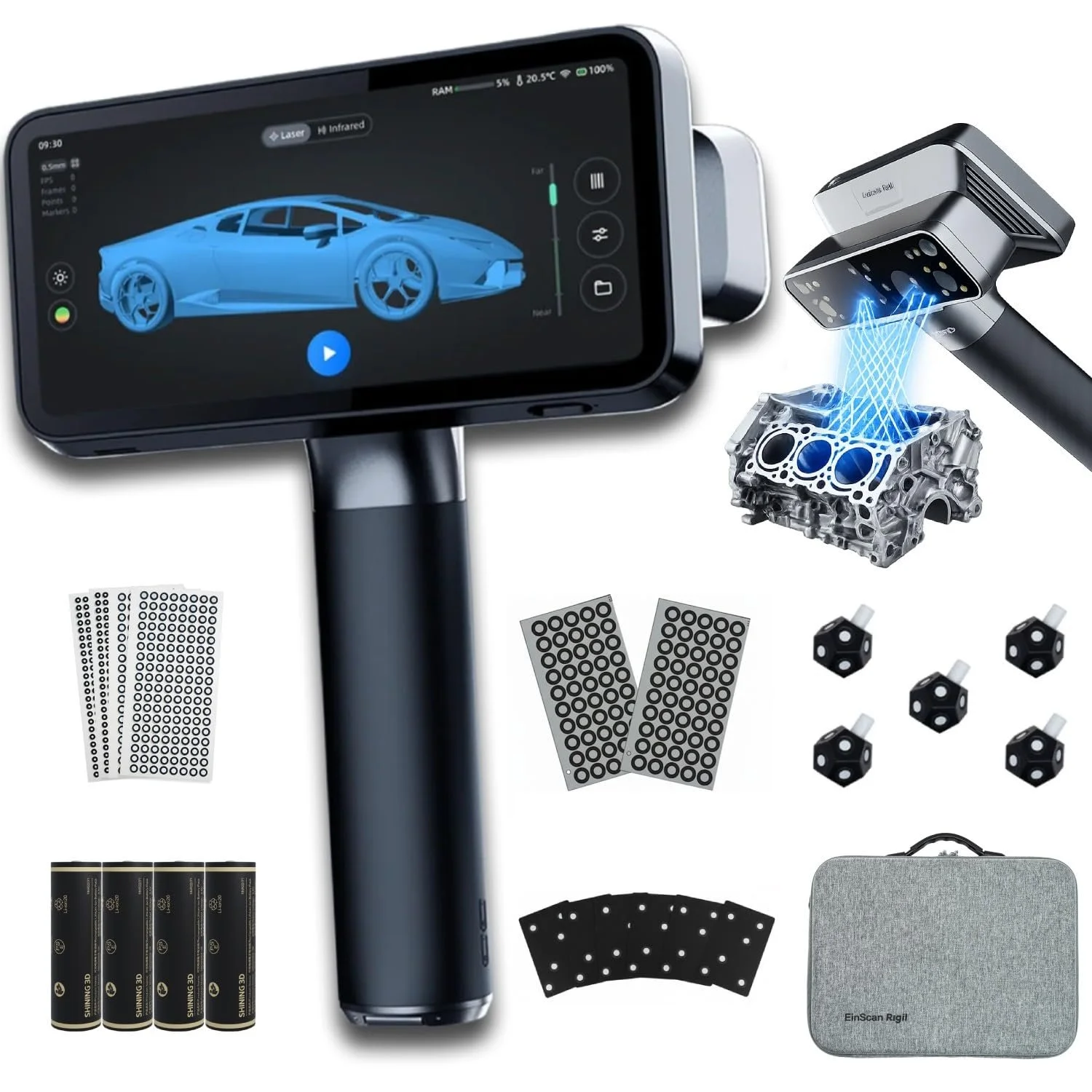
The EinScan Rigil Wireless 3D Scanner is built for professionals who demand the highest levels of accuracy combined with the freedom to scan in wireless, standalone, or wired PC modes. What sets the Rigil apart is its onboard computing system featuring a 2.4GHz CPU, 32GB DDR5 RAM, and a 1TB SSD, which essentially turns the scanner into a self-contained workstation. The built-in 6.4-inch 2K AMOLED display allows you to scan and review data instantly without needing a laptop.
Using Tri-Light Hybrid Scan Technology, the Rigil combines laser scanning with VCSEL infrared to deliver incredibly precise results with 0.04mm accuracy and 0.05mm resolution—numbers typically associated with metrology-grade equipment. Its 50 laser lines (25+25 crossed, plus 7 parallel lines) provide extremely dense point clouds, making the Rigil ideal for reverse engineering, automotive manufacturing, and industrial design.
The scanner’s 5MP color camera adds detailed textures and natural tones, which are particularly useful for professionals in product design, digital preservation, or CGI creation. Meanwhile, its advanced algorithms allow it to scan dark, reflective, or metallic surfaces without spray, removing one of the biggest workflow bottlenecks in precision scanning.
With true Wi-Fi 6 performance, a battery system built for mobility, and outdoor scanning compatibility, the EinScan Rigil delivers an incredibly versatile and powerful solution. For users who want pro-tier accuracy with complete mobility, it’s one of the strongest scanners of 2026.
Creality Sermoon S1 3D Scanner — High-Speed Engineering-Grade Scanning
CLICK IMAGE TO BUY ON AMAZON
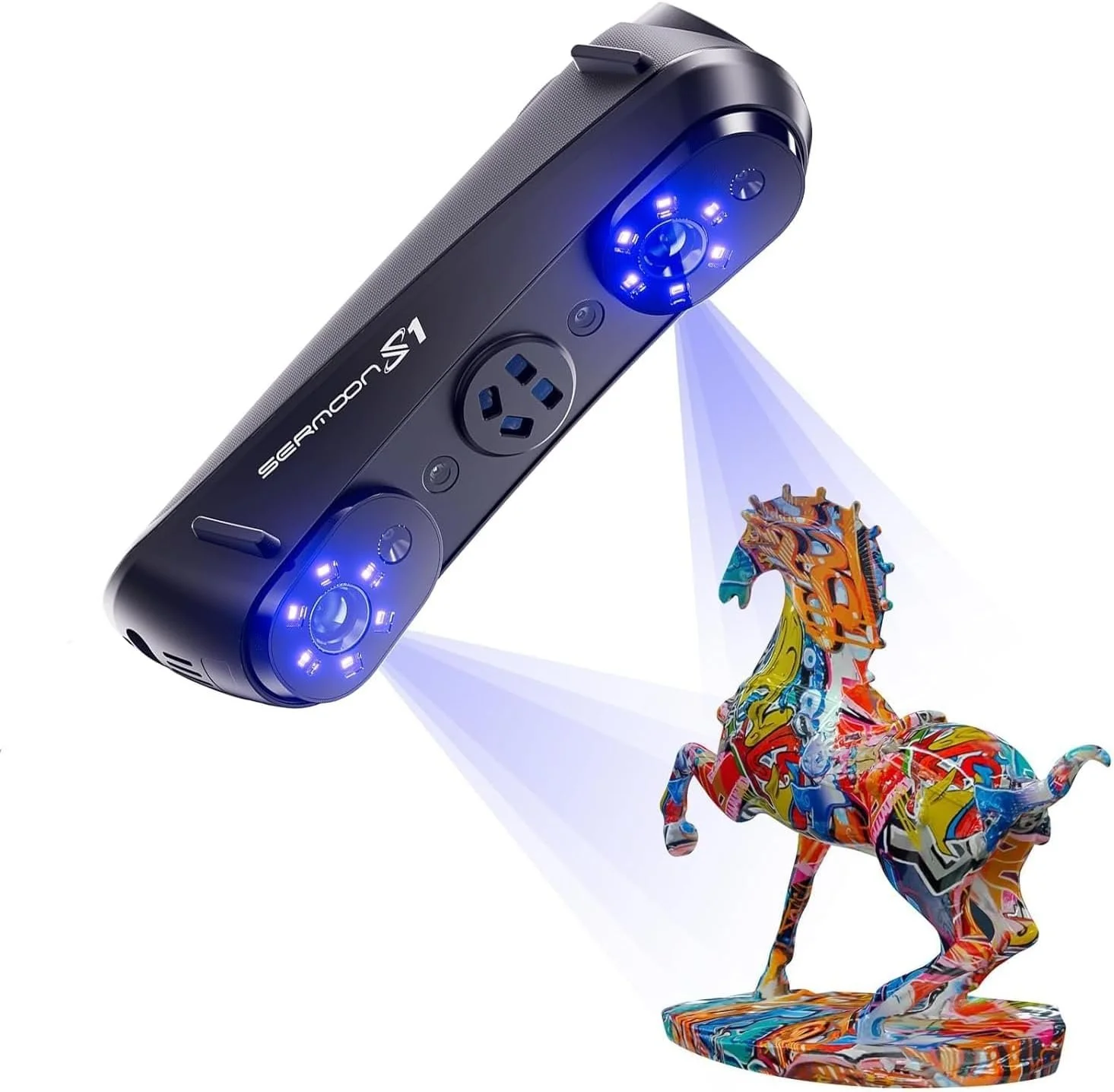
The Creality Sermoon S1 is a scanner designed for engineering, precision manufacturing, and reverse engineering workflows, offering performance typically reserved for far more expensive units. Its tri-laser configuration includes:
34 cross-line blue lasers for wide-area scanning
1 fine single-line laser for deep holes and narrow crevices
7 parallel blue lasers for detailed object refinement
This combination delivers metrology-grade 0.02mm accuracy, making it one of the most precise scanners available in a compact handheld format.
With scanning speeds of up to 90 FPS and over 1.4 million points per second, the Sermoon S1 excels at capturing mechanical parts, tools, injection-molded components, or objects with complex geometries. Its NIR structured-light mode adds versatility by enabling marker-free scanning of large surfaces or human bodies, making it useful for ergonomic modeling, custom orthotics, or digital avatar creation.
The CrealityScan software is surprisingly robust, featuring point cloud editing, auto-processing, body/face modes, and full integration with tools like Geomagic Control X, Design X, and Verisurf Inspect. This makes it one of the best scanners for engineers seeking end-to-end workflow compatibility.
Its system requirements are higher—meaning you'll need a powerful PC—but for users who need high-accuracy scanning for engineering applications, the Sermoon S1 is a compelling choice.
Revopoint POP3 Plus — Affordable Precision With Full-Color Scanning
CLICK IMAGE TO BUY ON AMAZON
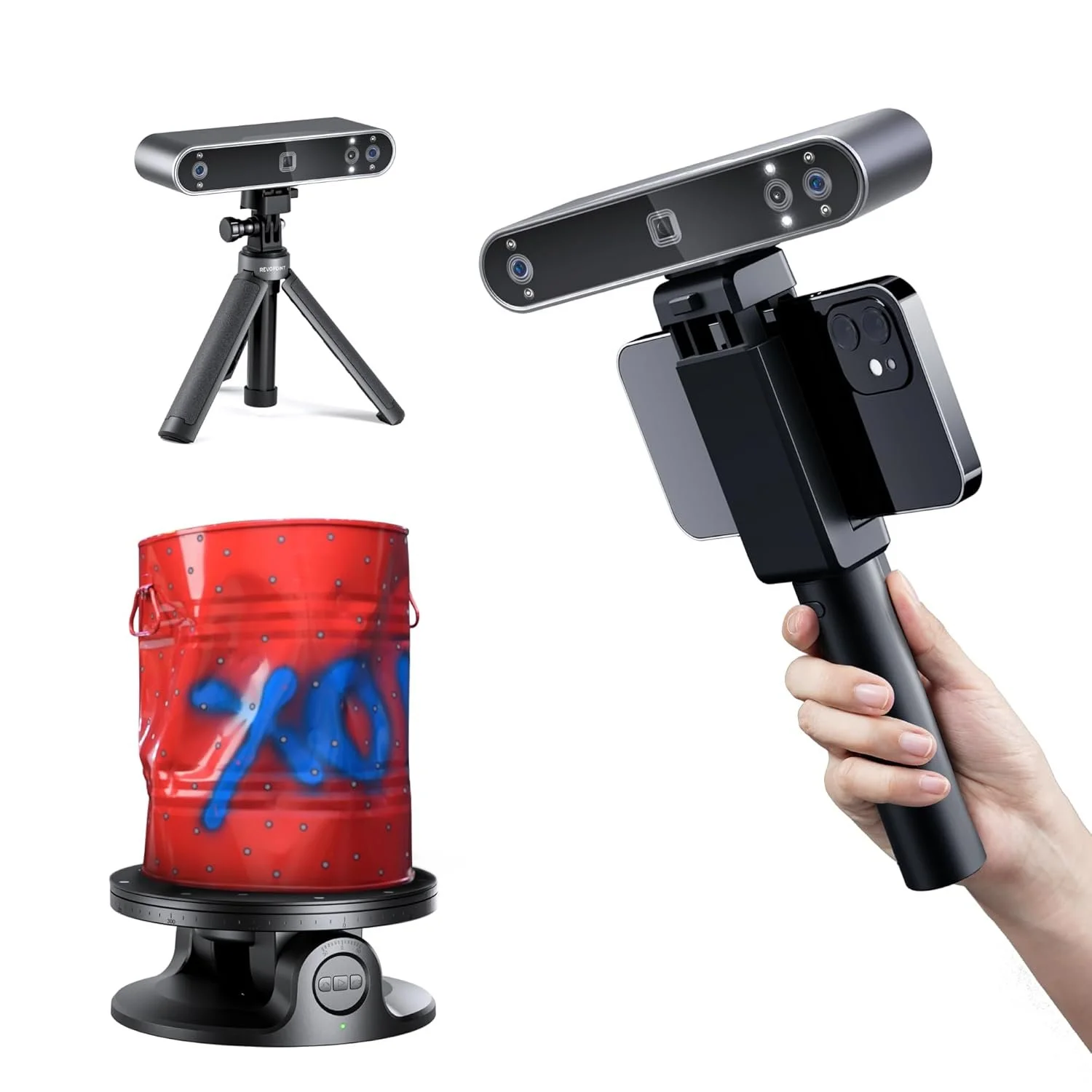
The Revopoint POP3 Plus is designed to bring accurate 3D scanning to everyday creators, hobbyists, and small businesses. Despite its lightweight 190g build, the POP3 Plus delivers 0.04mm precision, making it strong enough for DIY prototyping, product design, artistic modeling, and even digital archiving.
One of its standout features is the improved calibration system, based on advanced photolithography, which ensures the scanner stays within 20 microns of accuracy. For creators who rely on consistent geometry for 3D printing, this reliability is a huge advantage.
The POP3 Plus captures full-color scans using a high-definition RGB camera and a Flash LED lighting system, making it suitable for scanning faces, body parts, textured objects, or artistic pieces. With scanning speeds up to 18 FPS and a built-in 9-axis IMU, the scanner stabilizes shaky frames, reducing the chance of misalignment during handheld scanning.
Its compatibility with iOS, Android, Windows, and macOS, along with support for Wi-Fi 6 and USB-C, makes it highly versatile for creators on the move. Exporting in formats like PLY, OBJ, STL, 3MF, GLTF, and FBX ensures seamless integration with CAD programs, game engines, slicers, and modeling tools.
Software is where Revopoint shines: Revo Scan offers simple tutorials, intuitive editing, and advanced features such as global marker tracking. The optional Revo Design (powered by Quicksurface) helps convert raw scans into CAD-ready models quickly.
For creators who need a budget-friendly scanner with solid precision, color capability, and multi-platform support, the POP3 Plus remains one of the best values in 2026.
3DMakerpro Toucan — The All-in-One Standalone 3D Scanner
CLICK IMAGE TO BUY ON AMAZON
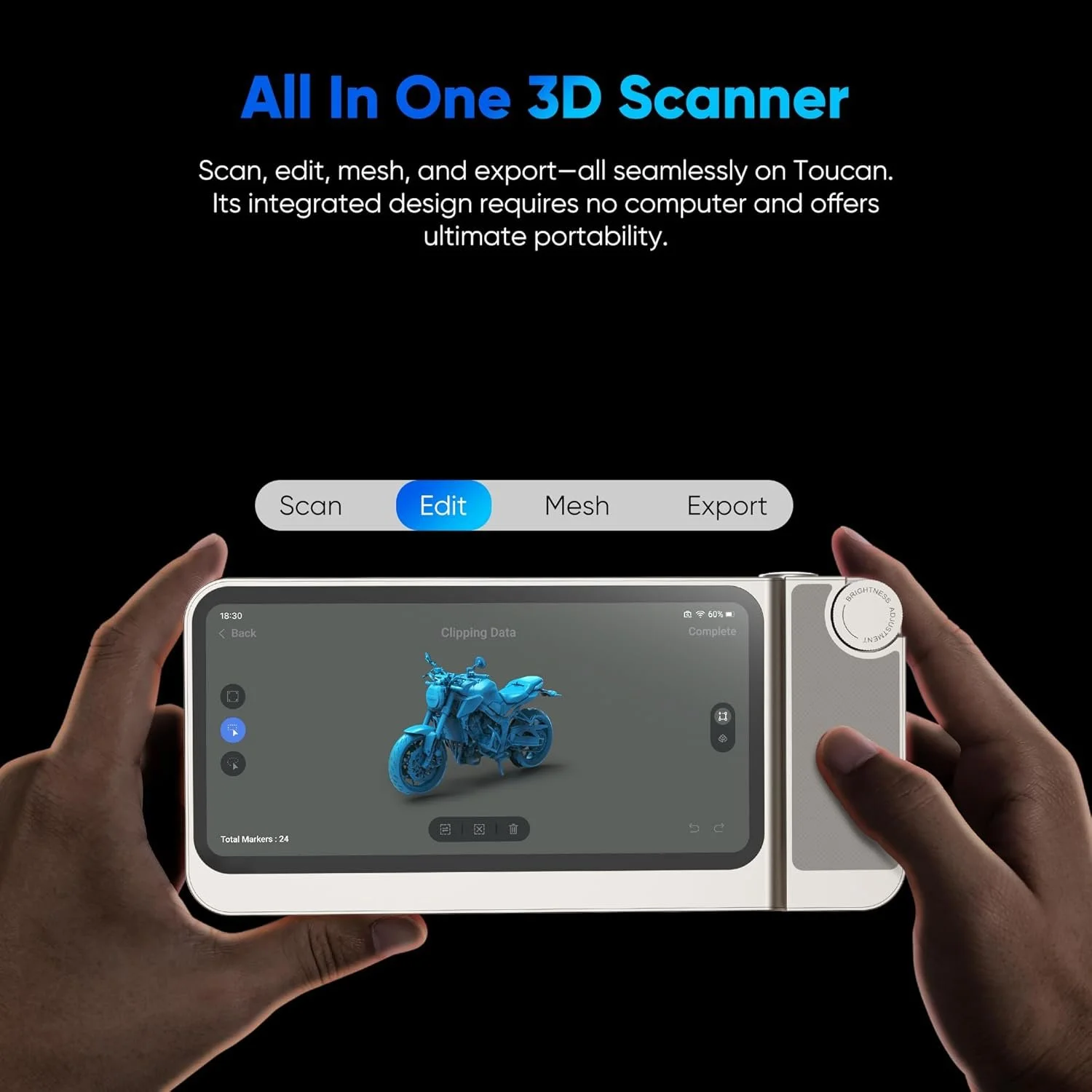
The 3DMakerpro Toucan offers something unique: a fully standalone 3D scanning system that does not require a PC during scanning. With its built-in 8-core processor, 32GB of RAM, and 256GB of storage, the Toucan processes, edits, and exports models internally, making it one of the most portable scanners ever built.
Its blue-light projection technology achieves 0.03mm accuracy and 0.05mm resolution, and the integrated 48MP color camera with a 9-axis position sensor produces exceptionally detailed, vivid models. This allows users to scan small objects such as jewelry or intricate components while also handling large furniture, car parts, or sculptures up to 1000 × 750 mm.
The Toucan’s damping adjustment wheel makes brightness and zoom adjustments incredibly intuitive, while shortcut buttons allow you to start, pause, stop, or take snapshots instantly. With a 6600 mAh battery delivering up to 120 minutes of continuous scanning, the Toucan functions more like a dedicated handheld computer than a traditional scanner.
It includes a manual turntable, calibration board, markers, and a silicone case, making it a complete “ready-to-scan” package. Like most handheld 3D scanners, it has a learning curve, but once users understand the workflow, the Toucan becomes a powerhouse tool for artists, designers, engineers, and makers seeking portability without compromises.
Final Thoughts: Which 3D Scanner Is Right for You?
The 3D scanning market in 2026 has evolved into a landscape where wireless mobility, laser precision, full-color accuracy, and AI-enhanced software are no longer optional—they're expected. Each scanner in this review serves a distinct type of creator:
EINSTAR Rockit — best all-around wireless solution for engineers and field professionals
3DMakerpro Moose — best for medium-format and full-color artistic models
EinScan Rigil Wireless — best professional-grade system with standalone computing
Creality Sermoon S1 — best engineering tool for metrology-grade precision
Revopoint POP3 Plus — best budget-friendly scanner with strong accuracy
3DMakerpro Toucan — best standalone all-in-one device for creators who need portability
As 3D scanning becomes more accessible and powerful, choosing the right tool depends on your workflow—precision engineering, artistic capture, field mobility, or full-color realism. If you found this breakdown helpful and want more deep-dive tech reviews designed for creators and professionals, please subscribe and stay tuned for more insights into the most important gear shaping 2026’s digital future.
